
NGC 7000
North American Nebula
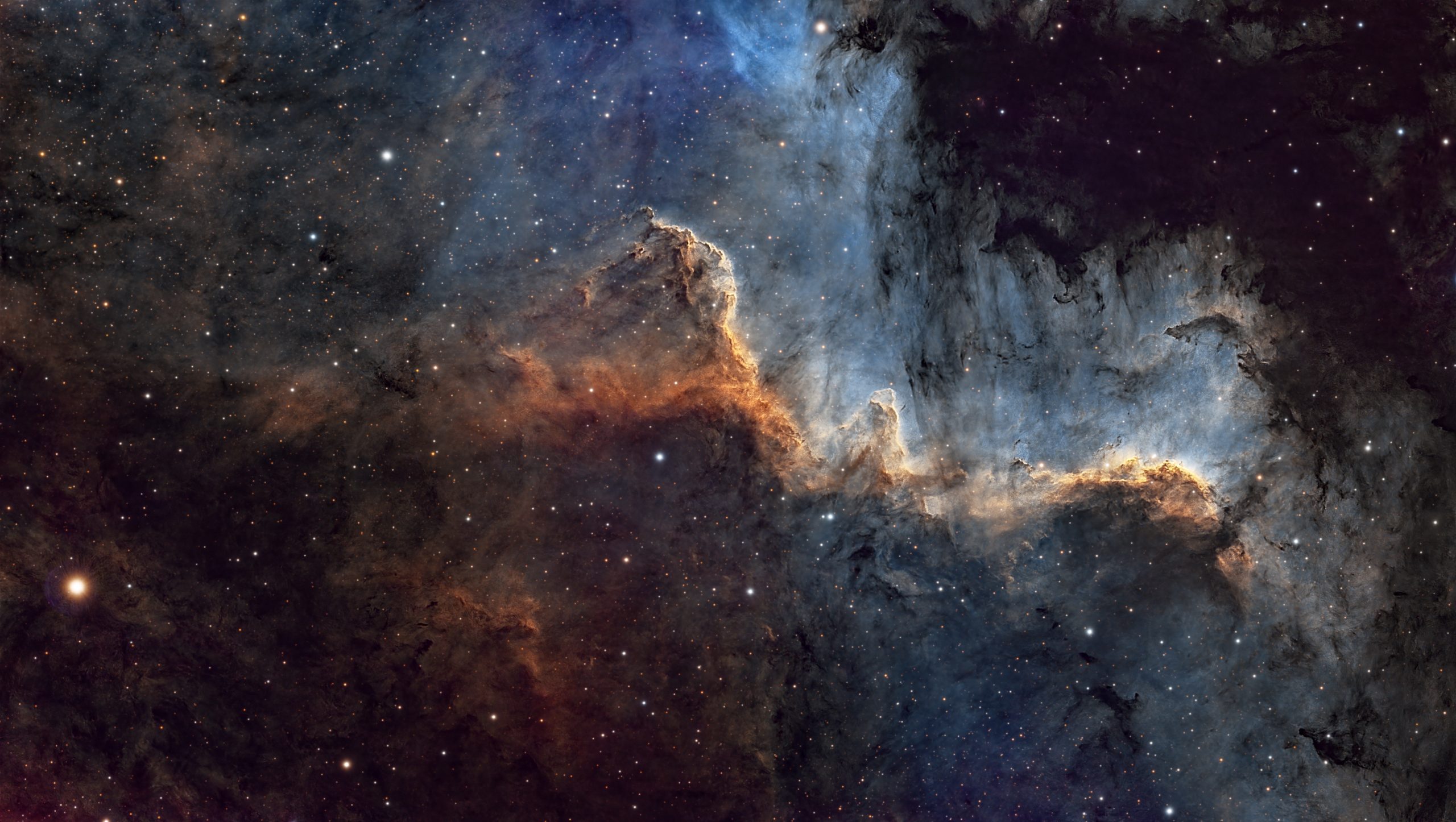
NGC 7000, more famously known as the North America Nebula, is an incredibly vast and impressive emission nebula situated within the constellation Cygnus. It stands out as one of the most widely recognised and admired deep-sky objects, largely because of its striking and unmistakable resemblance to the shape of the North American continent. This resemblance is so detailed that it even features a clearly defined “Gulf of Mexico” area, making it a favorite target for both amateur and professional astronomers alike.
Key Characteristics
Location:
Situated near the bright star Deneb in Cygnus.
Distance:
Approximately 1,600 to 2,590 light-years from Earth.
Size:
Spans roughly 100 to 140 light-years across. In the night sky, it covers an area more than four times the size of the full moon.
Type:
An emission nebula composed primarily of ionised hydrogen gas (H II region) that glows red when captured through astrophotography.
Discovey:
First observed by William Herschel in October 1786.